Imagine a word… It was there before you were conceived before you were born. A word with context, roots and a history of its own. Then you are born, and you meet this word. Your job therefore is to use it. You are to learn to use it within its precincts. It’s not for the word to come to you but for you to go to it!
Words attempt to tell our stories before we can learn to speak. Before we develop the ability to comprehend the world and communicate, words normally have already thrown us into classes and assigned us personalities. Describing us as rich or poor. Slaves or masters. Leaders or the led. Alluding to our introversion or extroversion… This story, inked on paper is stapled right on the cerebrum and the syntax becomes the lens through which we view and interpret the world…
Words, by nature, try to define and pin down. Words and consequently language can be confining, offering too little room for imagination and invention.
Take the word ‘free’ for instance. A single word with indefinite definitions. It’s just one word, but its meaning depends on where you’re parched, and where your tent is pitched. Language bears a character similar to a chameleon, obeying the orders of the person holding the power. Don’t overthink the word ‘power’ here. You can see the loophole. The distinct likelihood of language being twisted and bent, for better or worse.
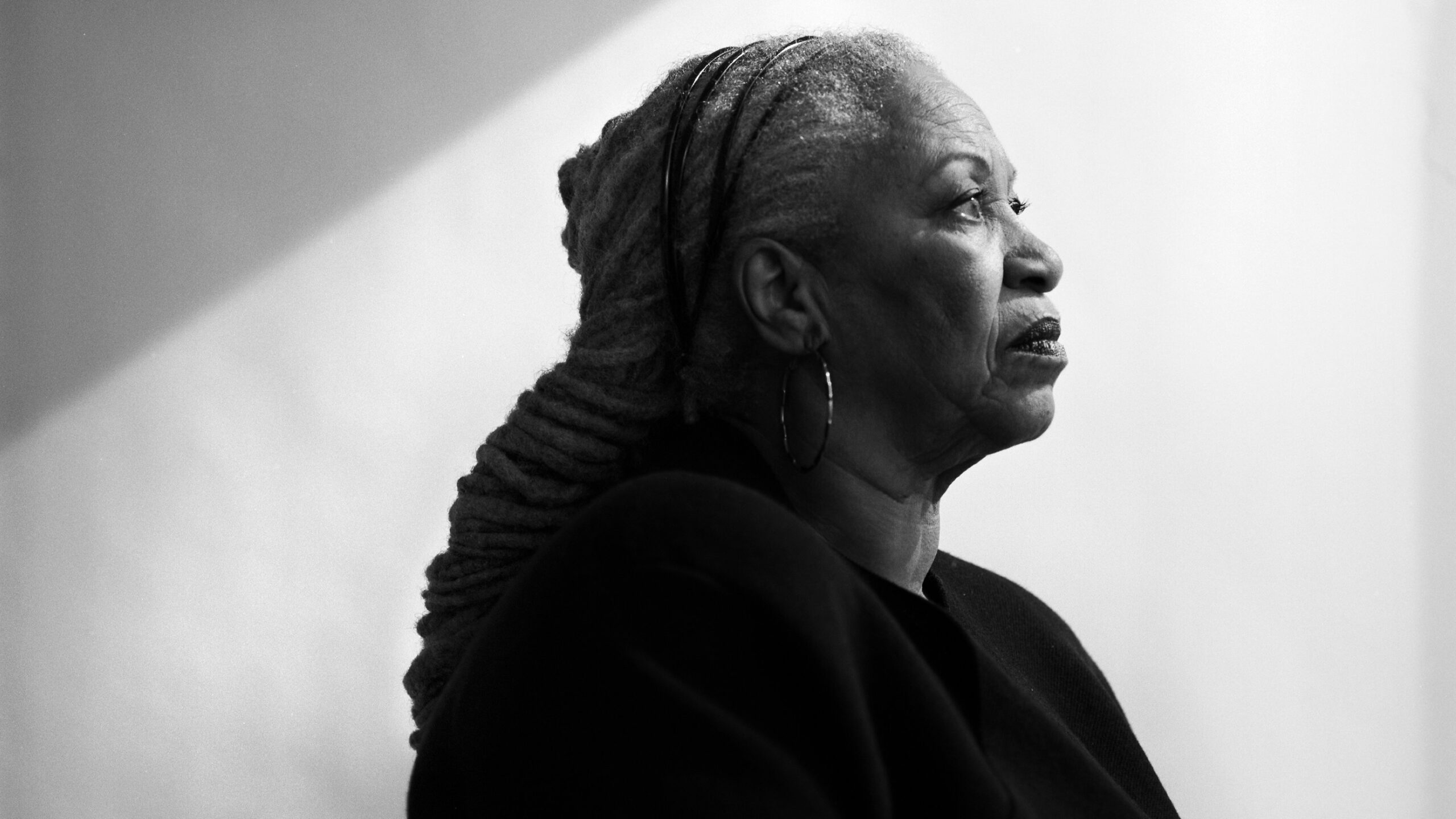
Enter Toni Morrison…
“Beloved” was the book that showed me the beauty, power and of an author choosing every single word with great intention. In her foreword of the book, Ms Morrison noted that “to render enslavement as a personal experience, language must get out of the way.”
She wasn’t just a lover of language. She critically understood its power to “manipulate, confound, wound, twist, and kill.” “Oppressive language does more than represent violence; it is violence; does more than represent the limits of knowledge; it limits knowledge.” Then there’s language that “surges toward knowledge, not its destruction.” Toni Morrison encouraged us to see language “in fact as a result of human power.” That it is our responsibility to dissect it, understand it and dexterously use it to confront history, heal wounds, illuminate the truth and most importantly tell our stories. To tell stories about “what the world has been to us in dark places and the light” for only language can show us “how to see without pictures. Language only protects us from the scariness of things with no names…”
Toni Morrison showed me the power of a story written with carefully picked words. As a reader, in her characters’ world, I could feel the weight of the intentional thought behind every word. She mastered the science of bending language to her will, that she dared to invent her own syntax. She taught me to be comfortable with throwing the word appropriate out of the window, for it is premised on permission. Appropriate is what Toni Morrison was not. Appropriate is prescriptive. No great story is premised on appropriateness. Appropriate is how we end up with blurred accounts, accounts laced with apologies for being who we are and experiencing what we’ve experienced. There are no appropriate words for our stories, we have to choose them from our own tents, from our own experiences, whether they will be interesting is not an issue for us to mull over or for others to decide…it is what it is!
She was herself. She unapologetically wrote about African-American experiences for African-Americans. She wasn’t caught up in pursuing like-ability with the kind of literature that was popular then, ‘white-centred’. She was the first black woman to win the Nobel Prize for Literature. She was a trailblazer and an architect who changed the language landscape.
She didn’t write for me, but experiencing her work moved my heart and sparked critical bulbs in my mind as a person, a woman and a writer. She inspired generations of writers, artists and thinkers and am happy I was one of them…
Rest in Peace our literary godmother.
Toni Morrison showed me the importance of being careful not to interrupt a story with my ideas.

Leave a Reply